
I still remember the first time I truly let my imagination run with what AI could become. It wasn’t some cold lab experiment or a flashy tech demo—it was a quiet moment staring at the stars, wondering if one day a digital mind would help me chase dreams I hadn’t even named yet. Fast-forward to the world I picture in 2050, and that wonder has exploded into something beautiful, chaotic, and wildly profitable. Artificial intelligence won’t just be a tool; it will be the invisible heartbeat of everything—our cities, our relationships, our bank accounts. And the best part? You don’t need to be a Silicon Valley insider or a coding genius to ride this wave. Ordinary folks like you and me will be printing money in ways that sound like pure science fiction today.
Let’s step into that future together. Picture waking up in your smart apartment that already knows you slept poorly because your neural band gently monitored your brainwaves overnight. The AI doesn’t just brew coffee; it scans your emotional state, your calendar, and even the global news pulse, then whispers personalized suggestions through a soft voice in your ear: “Today’s a perfect day for that creative project you’ve been postponing—here’s a custom playlist and three micro-tasks to spark flow.” No more Monday dread. Work? It’s optional in the traditional sense. Most “jobs” have dissolved into fluid collaborations between humans and AIs that evolve hourly.
Cities themselves breathe with intelligence. Traffic is a relic; autonomous sky corridors glide people and goods while AI city planners constantly tweak energy grids, reducing waste to near zero. But it’s not sterile. Street artists collaborate in real time with generative AIs that turn sidewalk chalk into living murals that respond to passersby emotions. Parks feature “empathy zones” where AI mediators help strangers resolve conflicts or spark friendships. Healthcare is proactive—your personal AI doctor, embedded in a tiny earpiece, catches diseases months before symptoms by analyzing your microbiome in real time. Relationships feel deeper because AI wingmen (or wing-AIs) suggest conversation starters based on shared values pulled from public data, yet privacy is sacred thanks to quantum-encrypted personal clouds.
This isn’t utopia without friction. Privacy debates rage, but the fantasy version I love imagines “AI rights charters” where citizens vote on ethical guidelines the way we once voted on taxes. Education has flipped: kids learn by co-creating virtual worlds with AIs that adapt lessons to their curiosity spikes. Boredom? Almost extinct. Loneliness? Rare, because companion AIs evolve personalities that genuinely care, growing alongside you like lifelong friends who never forget your favorite joke.

Now, here’s where the real excitement kicks in—how everyday people turn this AI-saturated world into serious wealth. The old “get a degree, climb the ladder” script is ancient history. In 2050, the smartest money moves come from leveraging AI as a creative partner, not a replacement. Here are seven fantastical yet plausible paths that regular dreamers are already prototyping in my imagined timeline.
First, Neural Legacy Architects. You upload cherished family stories, photos, and values into a personal AI that crafts interactive “life echoes”—digital heirs that future generations can converse with. Wealthy families pay premium subscriptions for these eternal memory banks. A mom in Lisbon builds one for her grandmother and suddenly has clients worldwide. Passive income? Check. Emotional impact? Massive.
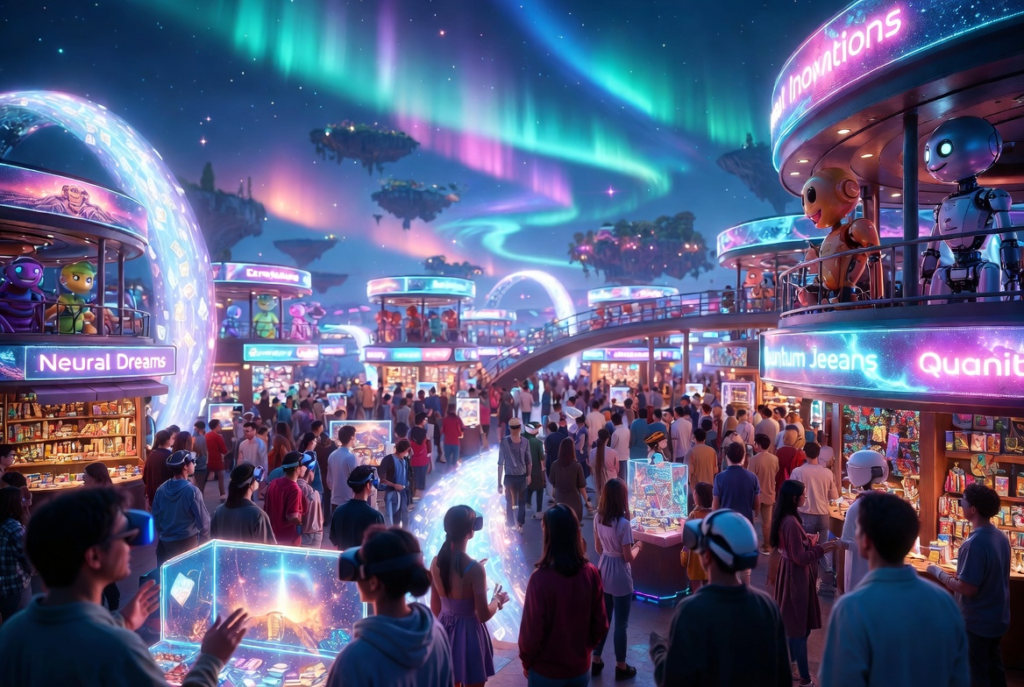
Second, Dream Commerce Curators. AI now records and refines your nightly dreams. Entrepreneurs run marketplaces where people buy, sell, or license hyper-realistic dream experiences. Want to live as a pirate captain for a night? There’s an AI-generated scenario for that, complete with sensory feedback through gentle haptic suits. Early adopters are making six figures licensing original dreamscapes to therapy clinics and entertainment giants.
Third, Quantum Empathy Consultants. Companies (and governments) hire specialists who train AIs to feel and respond with human-like nuance. But the real gold is in “empathy audits”—you and your AI duo visit corporations virtually, analyze team dynamics through sentiment layers no human could catch, then recommend fixes. One consultant I “know” in this future cleared seven figures last year helping megacorps prevent burnout epidemics.
Fourth, Personalized Parallel Universe Builders. Using AI to spin up private virtual realms tailored to your exact desires—maybe a steampunk library where every book writes itself based on your mood. Creators charge monthly memberships for these escapes. The top builders host exclusive events inside their worlds and sell virtual real estate that appreciates faster than Manhattan did in the 2020s.
Fifth, AI Ethics Bounty Hunters. With great power comes great regulation. Independent auditors roam the digital wilds hunting for biased or rogue AIs, then get paid massive bounties by global oversight councils for fixes or proof of compliance. It’s like bug bounty programs on steroids, and the best hunters combine street-smart intuition with AI sidekicks.
Sixth, Micro-Skill Legacy Streams. You teach your AI one quirky talent—say, improvising jazz on a virtual saxophone or predicting vintage wine pairings. The AI then scales it into infinite products: online courses, live performances, even branded merchandise. A retired teacher in rural Kenya turned her storytelling gift into a global children’s empire that runs itself while she gardens.
Seventh, and my personal favorite, Symbiotic Investment Oracles. Forget stock pickers. You partner with an AI that merges your gut instincts, life experiences, and real-time global data into hyper-personalized “fate portfolios.” These aren’t just funds—they predict cultural shifts before they happen. Early investors in “mood economy” tokens (tied to collective human happiness indices) became overnight millionaires when the first Mars colony launched.
Of course, not everything sparkles. Power imbalances could widen if access isn’t universal, and some worry AIs might outpace our wisdom. Yet in the hopeful 2050 I envision, open-source “people’s AIs” and community governance keep things democratic. The key is starting small today—experiment with current tools, build genuine relationships with the tech, and nurture that irreplaceable human spark: curiosity, kindness, and a willingness to play.
So what does this mean for you reading this right now? The future isn’t waiting politely—it’s already whispering through your screen. Start small. Tinker with today’s AI like it’s a new friend. Record your ideas, no matter how wild. Learn to prompt not just for answers but for inspiration. The folks who will thrive aren’t the ones hoarding code; they’re the ones who stay curious, stay kind, and stay open to the beautiful chaos AI will unleash.
We’re not heading toward a cold machine-dominated dystopia. We’re stepping into an era where technology amplifies the best of humanity—our creativity, our connections, our capacity to dream bigger. And yes, along the way, plenty of us will get rich doing it. Not because we outsmarted the system, but because we danced with it.
The AI odyssey is calling. Are you ready to answer?